Author: Maria Neagu

  • Against Many, One: Pluribus and the Messiness of Being Human

    Contains spoilers for Pluribus.


    © 2025 Apple TV

    “To know what you prefer instead of humbly saying Amen to what the world tells you you ought to prefer is to have kept your soul alive.” – Robert Louis Stevenson

    At the end of last year, Pluribus (2025-present) became the most watched show in Apple TV history, surpassing Ted Lasso (2020-present), Severance (2022-present) and a host of other beloved properties. Taking into account that Pluribus is the latest creation from showrunner Vince Gilligan, whose previous work includes Breaking Bad (2008-13, AMC) and Better Call Saul (2015-22, AMC), which heralded and staunchly represented the modern Golden Age of television, the statistic comes as no surprise. If you’ve seen anything of Pluribus, however, you might still find yourself scratching your head. 

    At a time when media in general and television in particular are happily adapting to our screen addictions and shortening attention spans, Pluribus — with its prolonged stretches of silence, sparsely populated long shots and slow rhythm — seems to be an anachronism. And yet, the series is no less a competent charting of the current zeitgeist. 

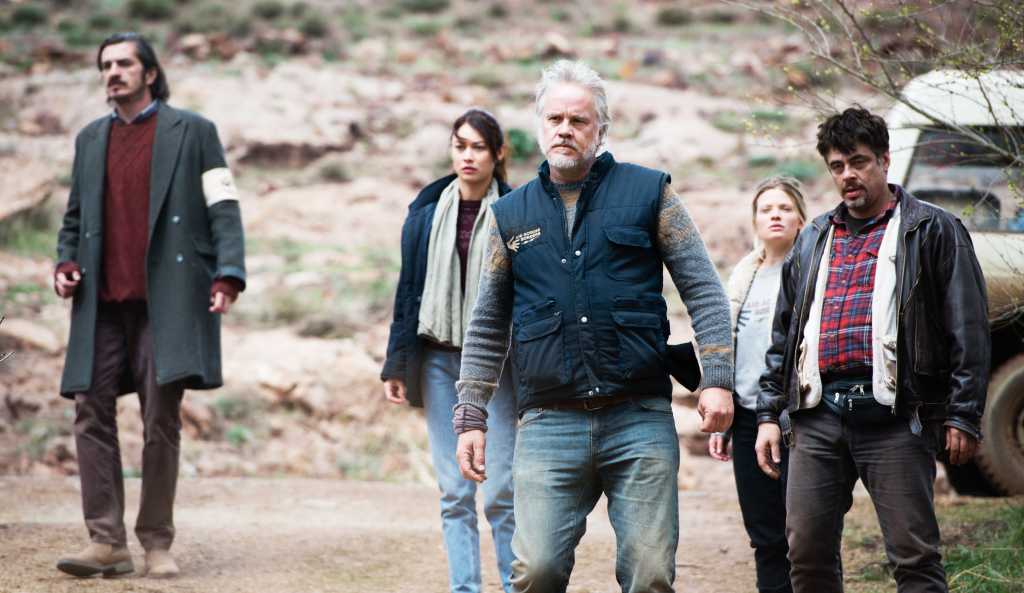
    Headlined by Saul alum Rhea Seehorn, Pluribus takes place in a world where most of humanity, infected by an alien virus, has joined into one hive mind. The only survivors are Carol Sturka (Seehorn) — a romantasy novelist from Albuquerque, New Mexico; Manousos Oviedo (Carlos-Manuel Vesga) — a self-storage facility worker from Paraguay; Koumba Diabaté (Samba Schutte) — a Mauritanian gentleman with eccentric inclinations; and ten others, all of whom hold different views and interact with their newfound situation in different ways. 

    It is mainly through Carol, though, that we come to understand the world of Pluribus. Her relentless fight to hold on to her self makes her different from Manousos, whose main resolve is to save the world, and from Mr. Diabaté, who seems a little too eager to enjoy the privileges of being one of the last ones standing. Her feelings keep shifting as she treads the line between her desire for self-preservation and her need for connection, and, in her character, Pluribus gives us both an exploration and a celebration of what it means to be human. 
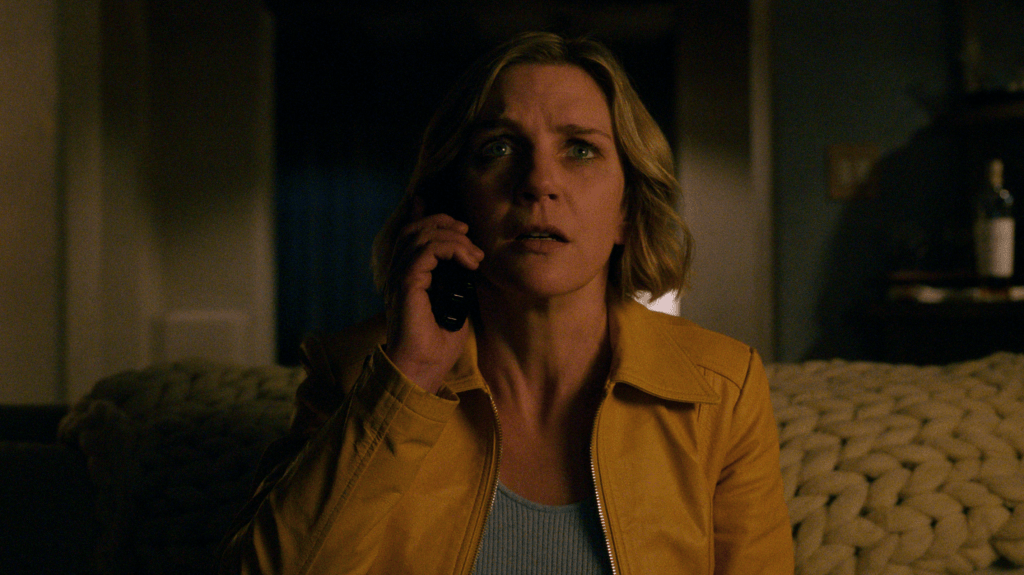
    Rhea Seehorn as Carol Sturka © 2025 Apple TV

    On the day of the Joining, Carol, who has just finished the book tour for the latest installment in her widely successful series Winds of Wycaro, is ready to return to her quiet life with her agent and wife Helen (Miriam Shore). Though aware that said life is a result of Wycaro, Carol has no issues making her disdain for the series and its fanbase known, going as far as to call her own writing “mindless crap” and hoping that she would finally be able to publish her first serious book. In these first scenes, Pluribus gives us everything we need to know about her: Carol is not an easy person to live with. Even so, by some miracle, she’s managed to find someone who understands and accepts her completely, and with whom she can be happy. Then, the world stops and she loses everything — Helen dies in the commotion of the Joining and Carol finds herself alone. 

    Before she understands what’s truly going on, Carol is racked by her grief, and her grief informs how she will interact with the new problem beginning to take shape: almost all of humanity is now one. This one, the Others, all share one consciousness though they still use the individual bodies of those infected by the virus. They seem a well-meaning entity, offering to help Carol with answers to questions she might have and everything else she might need, and even sending a chaperone, Zosia (Karolina Wydra), who they think will make her comfortable, to help her navigate this post-Joining world. 

    At first, Carol wants nothing to do with it. She sees Helen’s death as a personal attack and is skeptical of the Others’ apparent good intentions. But she fears being turned into one of them and needs to find a way to turn the world back to what it was, so she decides to make use of their resources, taking a plane to meet with the other English-speaking survivors. Her rage and rashness burn the bridge between her and her fellow self-determining humans, who seem more accepting of the situation than she is, and she returns to Albuquerque feeling a deeper sense of isolation. Still, the entity won’t leave her side. 

    As Carol begins to reluctantly embrace the Others and Zosia’s presence in her life, we see a stark contrast between her fiercely human characteristics and their prioritization of streamlined efficiency. Where Carol paces, their movements seem purposefully choreographed. Where Carol is rash, they are calculated. Where Carol makes a mistake and tries again, they put together all the world’s brightest minds to get it right the first time. Pluribus seems to delight in this contrast and in the minutiae of the post-Joining world. Long sequences of perfect movements meant to answer Carol’s absurd requests, abandoned cars, deserted neighborhoods and entire cities left in the dark for efficiency’s sake — all examples of the series’ beautiful worldbuilding — show us what Carol is up against and that, despite it all, she still wants to see the lights turned on even if no one lives there anymore. Sometimes, her interactions with this world are downright ridiculous, as when a drone comes to collect her trash only to end up wrapped around a lamp post. Most times, however, they are an unnerving and disturbing reminder of how much Carol has lost and why she needs to continue her fight. 

    These interactions are also how she comes to see that the entity is not infallible. They truly are well-intentioned and peace-seeking, but they also can’t understand sarcasm and, most importantly, they can’t lie. Carol takes it one step too far when she uses her findings against them and, for the first time since the Joining, she is completely alone. The Others leave Albuquerque because they need their space from her, and, for forty-something tedious days, Carol only has as company a voice message constantly reminding her that she has no one. It is during this time that she discovers the darkest truth about the Joining yet and also that they need her consent to turn her. A weight seems to lift off her shoulders and she starts to enjoy the small liberties awarded to her by this world — like playing golf whenever she wants or singing her favorite songs from the top of her lungs — but her loneliness soon becomes too much to bear, and, sick of spending time with just herself, she begs them to come back. 
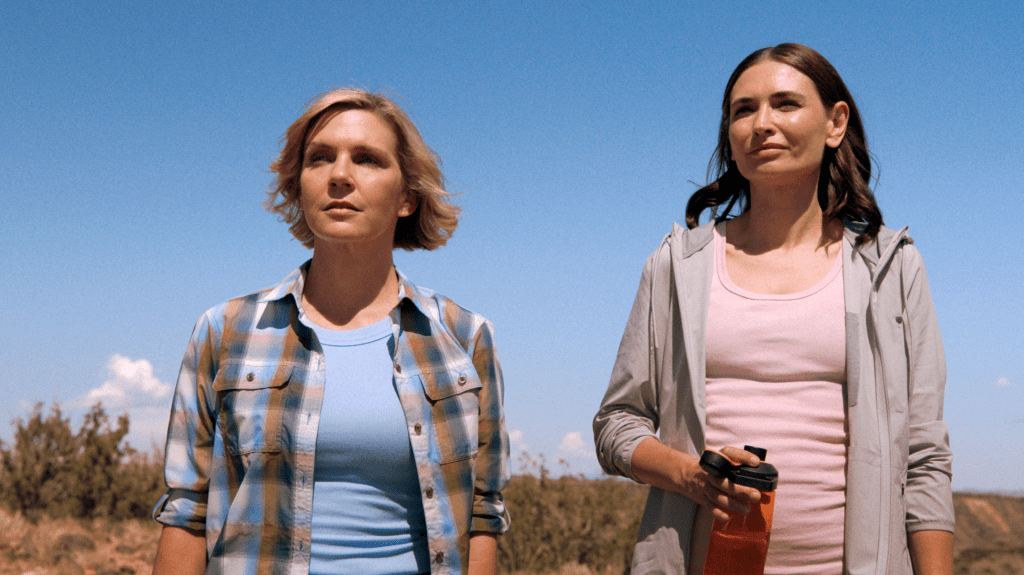
    Seehorn and Karolina Wydra as Zosia © 2025 Apple TV

    Slowly, Carol begins being pulled to the other side. She grows closer and closer to Zosia as the line between whether what’s happening is genuine or plain manipulation becomes murkier and murkier. Even so, Carol’s happiness seems real. In spite of the adversity she’s faced, she’s managed to carve out a semblance of a life, have someone to share it with and find some joy in this barren world that has barely anything to offer to an un-joined human. But it’s never quite that simple, is it? 

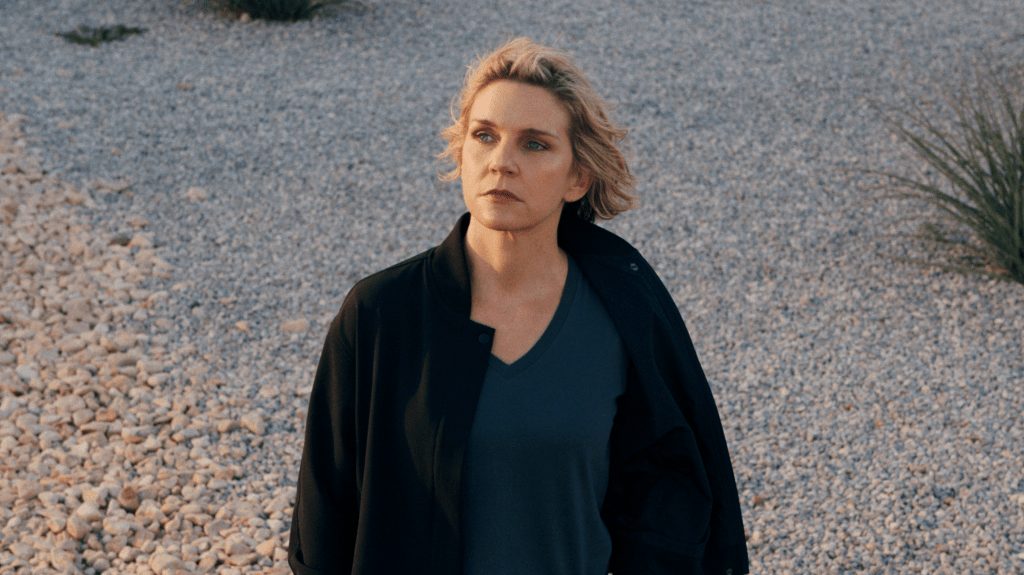
    The Others’ biological imperative — to turn every last survivor into one of them — has always been stronger and they’ve never given up on finding a way to turn Carol and help her experience the happiness they’ve been privileged to experience. This revelation comes as another personal attack to Carol and crystalizes both her character and Pluribus’ throughline. As a gay woman, Carol has fought her entire life not to have others’ ideas of what it means to be happy forced upon her. She has fought to hold on to her individuality in spite of her fear of being alone. And she managed to survive. When the Others take over the world, destroying her life in the process, they bring her face-to-face with everything she had to overcome all over again. Carol may not have been consistently hellbent on saving the world and she may not possess the same sense of duty and justice as Manousos. But she does understand what it means to risk having everything you are ripped away from you, and, in that sense, she might be the most competent human ambassador and savior of all. 

    At a time when attention spans are being shortened, every impulse is being stifled by a need for convenience and individuality seems to be lost to trends, Pluribus forces us to suffer through Carol’s isolation and to watch her fight for her autonomy and to take back everything we take for granted. It shows us that being human means being impulsive, difficult, inconsistent, imperfect. It means feeling lonely, scared, misunderstood. But also that it means having a choice, the chance to try again, the right to seek and to find your own idea of happiness. To cherish all these things means to keep your soul alive, and the fight to keep your soul alive is never truly over. 
    © 2025 Apple TV


    Season one of Pluribus is now streaming on Apple TV.
  • “I’m a writer who directs”: An Interview With Fernando León de Aranoa

    NOTE: This interview took place in April 2023 as part of my portfolio for the MA Screenwriting course at UAL. I would like to thank Fernando León de Aranoa for his participation in the interview and for his kindness in allowing me to share it in the form of this article.

    Contains spoilers for The Good Boss.


    © 2021 Reposado Producciones

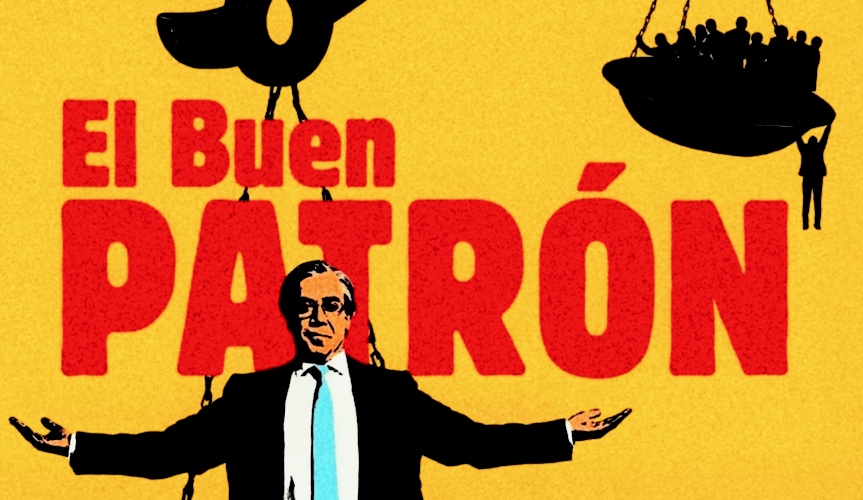
    Fernando León de Aranoa is one of the biggest names in Spanish cinema. His penchant for stories with a strong social core and human characters, his crossovers into the English language, as well as his collaborations with actor Javier Bardem have won him acclaim. Most recently, the satire El buen patrón (tr. The Good Boss) — his third team-up with Bardem — won six Goya Awards, including Best Picture, and was Spain’s official submission at the 94th Academy Awards in 2022. But that wasn’t always the case for him. 

    “I always liked movies, but I never thought my future would be so closely tied to cinema”, León de Aranoa tells me. He started out as an artist. He loved drawing and thought he would work as an illustrator. A screenwriting workshop changed everything. “[It was] three weeks with three different tutors who were professional screenwriters in Spain. I always say it was a moment of revelation, of falling in love with cinema.” The world of stories opened before León de Aranoa and he set off to discover its possibilities. 

    He first started working as a screenwriter in television. But he knew his heart was set on cinema, so he spent his nights writing films until, finally, he sold his first script to a producer. “That was how I realized that this is what I want to do with my life: write movies.” His decision to direct came shortly after. León de Aranoa saw it as a means to become a better writer. He wanted to understand what happens on a set and the dynamics between director and actors, so he directed a short film and enjoyed it so much that he decided to keep doing it.

    His next script, he wanted to keep for himself. Telling the story of a lonely middle-aged man who hires a group of actors to act as his real family, the script became Familia (tr. Family), his first feature released in 1996. After Familia, León de Aranoa kept alternating between writing and directing, but he remained a writer at heart. “I’m a writer who directs”, he self-describes. “After eight features and a few documentaries, I think these two facets of my life are more balanced, but writing was very important. The moment of falling in love was very specific and happened in a screenwriting course.”

    Love may be a powerful fuel, but León de Aranoa admits that the journey of a filmmaker is far from straightforward. “You can’t make a film in one night. [It] … takes a year, two years, three years. It’s a marathon.” Faith can be hard to come by when one has to prepare themself to run for years, but León de Aranoa offers a piece of advice: “Talk about something that matters to you a lot, that you feel very connected to.” His films have always been made with passion, with the idea that they were important to him personally and that they had something to say. “If I weren’t so invested in the stories I’ve written and made, I think it would be very difficult.” He sees making a movie as a long conversation that goes on for years, with different interlocutors: first, as a writer, with oneself or with a co-writer. Then, with the actors and the crew before it finally reaches critics and audiences. “If you’re going to spend so much time talking about the same topic, it must be something that interests you. Otherwise, you will get bored along the way.”

    Making a film is a challenge in itself, but León de Aranoa never shied away from taking on additional challenges in his career. His decision to make his first film in English came as a way to accommodate the story. A Perfect Day follows a group of rescue workers of different nationalities at the end of the Yugoslav Wars. “The way I see it, these teams of workers are always very international. They are formed by a Spaniard, an Italian, a French person, an English person, an American, a Russian. And that makes it more interesting because it’s like a small Tower of Babel.” This can make comprehension difficult and can add to the chaos of a conflict zone which is the focus of A Perfect Day. The English language was thus the natural choice. “English is the language spoken in wars. It’s the international language known by everyone … a broken English, an imperfect English. That’s what I like about the film as well. That’s what it’s like in real life, and that’s what we aim for.”

    A Perfect Day © 2015 Reposado Producciones

    The making of A Perfect Day was a process as challenging as it was enriching for León de Aranoa. Using English to write instead of Spanish was like using “a much clumsier tool” than his usual “scalpel”, but it also allowed him to closely work with a translator. “[Toni] [sic] is a great translator. He … knows my style very well. The dialogue is important, and he helps me convey exactly what I need from each character.” León de Aranoa describes the process: “We communicate a lot. [Toni] does a first translation of the script and dialogue. He gives it back to me, and I work on it. I doubt and I challenge, saying that a particular word may not be the best because it lacks the exact nuances I need, and I show him my version. He gets mad at me and shows me his. Then I get mad at him and show him mine [laughs].” The result? “I remember a review from … The Guardian. … [They said] it seemed unbelievable that the dialogue in English sounded that way coming from a Spanish writer.”

    Directing, León de Aranoa felt more comfortable. “It was my knowledge of English that helped me direct the film.” Working with Benicio del Toro, who could understand him in both English and Spanish, and the rest of the cast also helped.

    When it comes to his most recent film, El buen patrón, León de Aranoa says that the idea behind it started with its protagonist, Julio Blanco, played by Javier Bardem. Blanco is the owner of a scales factory in a provincial Spanish town. His quest to obtain an award of excellence for his business drives him to meddle in his employees’ lives, exposing a toxic work environment in the process. Even so, Blanco firmly holds onto his ambitions. He paints over the cracks with such conviction that he manages to sell a fabricated image of perfection and to get the validation he so desperately craves… at the low price of a body and his own sanity.

    According to León de Aranoa, Blanco’s story followed him for “ten, maybe twelve years”. What interested him in particular was Blanco’s tendency to go way too far. From there, he followed the character, beginning to imagine the ways in which he inserts himself into the lives of his employees. A few defining scenes would appear to him. These scenes, where Blanco’s modus operandi is on full display, León de Aranoa calls “cornerstones” — they are the foundation of the character. The rest of the film is built around them.

    In his first films, León de Aranoa concerned himself with plot and structure. He quickly understood, however, that most important to him are the characters. “A film must take you by the hand and lead you to the end. That’s what the characters do … . The story can be very good, but you have to fall in love with the characters. You have to see them as people you’d like to hang out with, as people you know very well.” Audiences need interesting characters because when they care about the characters, they care about what happens to them and they will stay with the film to the very end.

    Blanco isn’t anything if not interesting. He constantly shifts between charisma and despicability without ever crossing the line into caricature. It’s a delicate balance perfectly struck by León de Aranoa’s screenplay. But what is truly remarkable about Blanco is the empathy we can’t help but find ourselves feeling for him. This was one of the aspects that terrified León de Aranoa most about making the film. “Blanco is a character that embodies the abuse of power.” At the same time, he was interested in the story because he believes it is something that we can each resonate with: “Any of us can be tempted to use the power we have over others.” Many of Blanco’s employees resort to using the power they have over their colleagues, albeit to a much smaller degree than their boss. Nevertheless, León de Aranoa offers a few potential reasons for why audiences might empathize with Blanco specifically: “It’s in the [film’s] humor, possibly. It’s in something that’s in the film’s DNA because [Blanco] is a character that suffers a lot throughout the film and there’s always empathy for suffering.”

    The work with the actors is also very important in bringing out the different nuances in a character. Of Bardem, León de Aranoa has to say: “Javier [sic] is fantastic because he has a sense of humor and understands the character very well. He can get you to feel affection for someone … like Blanco who is a terrible person.”

    Javier Bardem as Julio Blanco © 2021 Reposado Producciones

    The ending of El buen patrón, perhaps one of the film’s finest moments, offers no resolution for the audience. Things go Blanco’s way and the punishment never comes. León de Aranoa considered different endings before settling on the version we see, but he always knew that he wanted to shoot the scene of the committee’s arrival. Set to Michael Bublé’s “Feeling Good”, the sequence is almost like a commercial, exposing the irony in Blanco’s character. Everything is perfect — the factory, spotless and the employees, one big happy family — as Blanco, dressed in a light gray suit that looks as though it shines, greets the committee with a grin on his face. In reality, we know very well what he is hiding.

    By comparison, the film’s closing scene leans towards ambiguity. There is a brief moment where it seems like Blanco might feel some remorse for what he’s done, but he quickly brushes off any trace of feeling so he can once again assert his power over an exploited employee who may or may not get his revenge. This ending, which — according to León de Aranoa — sees the film close earlier than the story, leaves things slightly open. But León de Aranoa believes the audience has enough information to deduce what could happen: “You leave all the narrative mechanisms activated, but you don’t detonate them. … You let the viewer detonate them afterwards. In their mind, at home, talking to a friend. And that’s what I find very interesting because you make the viewer an active participant in the film. … You make them a co-writer of your film.” León de Aranoa leaves us with a moral dilemma to ponder and to decide for ourselves how far we want to see this situation go.

    Not all of his films have reached the same level of acclaim as El buen patrón, but León de Aranoa feels at ease when he looks back on his career so far. “Everything you do nourishes you. Everything you write is of use. … All of it made me the director and the screenwriter I am today.” He has had the privilege of always having made the films he wanted to make, and even if some films didn’t turn out the way he wanted, he can’t blame anyone else. “My eight films are my projects that I deeply desired and longed for. … If something went wrong, it’s my own fault. … I can’t even blame the screenwriter, which is something that happens and can be quite ugly [laughs].” León de Aranoa knows that mistakes will inevitably happen, but every experience can be a lesson and he doesn’t regret any of the films he’s made.

    When I asked him what he would say to a screenwriter at the beginning of their journey, León de Aranoa was encouraging: “I would tell them that they’ve chosen the best career in the world.” He thinks that someday, he might quit directing to solely focus on writing. “At the screenwriter’s desk, everything is perfect. … When you write, you’re truly free.” When he is in his office, León de Aranoa has the privilege of welcoming his characters into the world and of getting to know them before anyone else. “It’s a beautiful moment that only a screenwriter has access to.” But as beautiful as that moment may be, it doesn’t happen instantly. “You have to write a lot”, he advises. “Even when no one buys your scripts, … write, write, write.” The more one writes, the more one improves, even without realizing it.

    “Even when things aren’t going well, keep writing because, … when you write and it’s not turning out as beautifully as you want, that’s normal. It’s rare for every writing day to be a good day.” But every day, every moment one spends writing, counts. “… To have one good hour of writing, you need to have eight bad ones. Eight hours where nothing works, … where the dialogue makes no sense, where you don’t like what you’re doing. But then, you have one or two really good hours. And to have those two good hours, you have to go through the other eight.” As writers, we have to be prepared to keep going because the moment where everything falls into place might be just around the corner.